Tuesday, August 22, 2006

BCCF - a place for the Chinese in Bergen


The Chinese Christians in Bergen have recently organised themselves as BCCF - Bergen Chinese Christian Fellowship. BCCF will increase the number of Chinese worship services to have services on two Saturdays each month, starting from September 26. The services will take place in the parish hall, downstairs in St. Markus Church, Lotheveien 1. They are organised together with Bergen International Church and the Oslo congregation of SCCC - Scandinavia Chinese Christian Church. The leader of BCCF is Dr Liu Tiancun from Beijing.

BKKF
Gruppen av kristne kinesere i Bergen er nå organisert under navnet Bergen Kinesiske Kristne Fellesskap. Det langsiktige målet er å danne en egen kinesisk menighet i Bergen, men foreløpig organiserer BKKF gudstjenester på kinesisk i St. Markus kirke to lørdager i måneden. Dette skjer som et samarbeid mellom Bergen Internasjonale Menighet og den kinesiske menigheten i Oslo, som er en del av SCCC – Scandinavia Chinese Christian Church. Den nye lederen for BKKF heter Liu Tiancun og kommer fra Beijing.

Monday, June 26, 2006

World Cup Mission

Last Sunday we prayed for one of our members who is on a short-term mission trip to the football World Cup in Germany (name withheld), and today we have his report:

"Dear Friends,

Thank you so much for your prayers.

Yesterday we had a very good day here. It was a big gathering
at one market here in town. All the churches had joined forces.
They had different activities for the kids, a lot food, and different
groups at the stage.

I felt that I got prayer answered yesterday. I had a very good
conversation with one of the people who visited our stand.
I was very blessed, and I think that he was blessed through
it. And that was exactly what I asked for prayers for.

Saturday we also had a very good visit to one from Ghana.
He shared a lot of interesting things from his life.

I hope the week will have more of this.

blessings to all you."

Keep on praying!
Pastor Geir

Saturday, May 06, 2006

Baby Shower


Our youngest member, Selma Marie Joksch Berg, was born to Mona and Dag Erik a month ago, on April 5. Today we had a baby shower for her in the parsonage. Congratulations with the baby!

Wednesday, April 26, 2006

GOSPEL TRUTH?

A comment on John 20:19-31

Does Jesus want us to be naïve?
When Jesus showed himself to Thomas the sceptic a week after the resurrection, he said to him: “Because you have seen me, you have believed. Blessed are those who have not seen and yet believed” Does Jesus want us to be naïve? Unfortunately, too many people are naïve and believe anything they are told. That is why books like The Da Vinci Code become so popular. They think it is based on thorough research, when it is only a mix of fables. Unlike Thomas, we have never seen the risen Jesus Christ with our physical eyes. The only thing we have is the Bible telling us that it happened. How can we know it is true? Are we naïve to believe these stories? What about these other gospels that have been discovered, like the gospel of Judas?

Why were some books not included in the New Testament?
One of the claims in The da Vinci code is that at the time of the Roman emperor Constantine, there were many gospels in circulation. Dan Brown says that Constantine authorised just four of the gospels and had all the others burned. And when this so-called gospel of Judas becomes known to us, people start believing that they can’t trust our Bible anymore. So what really happened? Let me first give you a short answer and then a long one: The short answer is that there are three main reasons why they were not included: Firstly, they were not written by eye witnesses. Secondly, they were not in general use across the Christian church. Thirdly, they were not in accordance with the teaching of the apostles. Although Constantine, the first Roman emperor to embrace Christianity, had an interest in church politics, there is no evidence that he burnt any Christian books, and he did not authorise a particular list of books.

A long process
The gathering of the scriptures of the New Testament was not the choice of one man or one particular church synod. It was a long process, and it involved all the churches in the Christian world. The first Christians did not have the New Testament. They had something better: the New Testament writers themselves. They had Jesus Christ himself, who is in person the Word of God. They had the apostles, who remembered what he did and what he said, and who had received the Spirit of truth from Jesus.

The next generation of Christians had the scriptures of these apostles and the evangelists. They used these eye witness accounts in their worship services, along with the holy scriptures from the Old Testament. They also had a whole lot of other scriptures. These were widely used as literature, but they were not regarded as holy scripture on the same level as the gospels and the letters of Paul. The most famous of these scriptures have been gathered in a collection called “The apostolic fathers”.

The first known list of recognised New Testament books dates from around AD 170-200. It mentions all the books in our New Testament. The famous bishop Athanasius of Alexandria listed our twenty seven books in the year 365. A few years later, Gerome translated the Bible into Latin and gave the West its standard text, the Vulgate. These lists were then finally confirmed in two general synods in 397 and 418. My point is that this was not the accidental choice of one or two men. The whole Christian church was involved in this long process, and they used very strict criteria: The scriptures had to be eye witness accounts that were in accordance with the apostolic teaching and in common use in the worship services all across the Christian church.

What about the apocryphic gospels or acts?
A number of scriptures were written too late to be regarded as authoritative holy scripture on the same level as the scriptures that were included in our New Testament. These are sometimes called apocryphic books. Some of them are in accordance with the apostolic teaching while others represent heretic teachings like gnostisism. Common for these scriptures is that they try to fill in the gaps where the New Testament scriptures keep silent, for example about the childhood years of Jesus and the stories of the apostles not mentioned in Acts. It was common to give the book a name after a famous person. But even though the intention was good, this wasn’t always reliable.


The Gnostic gospels
Gnostisism was a syncretistic religious system that blended Christian beliefs with Greek philosophy and Eastern mysticism, and very much opposed to Jewish beliefs. It was a dualistic system where everything physical was regarded as evil and only the spiritual was good. The Greek word gnosis means “knowledge”. The idea was that Jesus gave secret knowledge to some of his disciples, who in turn passed it secretly on to others. In the Gnostic gospels the villain of the Biblical stories becomes the hero. The creator god of Genesis becomes the villain, while the serpent is the hero.

What about the gospel of Judas?
This was presented to the public just before Easter this year. It was found in Egypt around 1970 and smuggled to the USA. The fragmented manuscript is a Coptic (Egyptian) translation from Greek, dated to around AD 300. Scholars say that it does not give us new knowledge about Jesus Christ or Judas, but it does give us interesting knowledge about Gnostisism. The original Greek text was probably written around AD 150, so it was not written by Judas. The Church father Irenaus mentions it in AD 185. The text gives us the typical Gnostic picture of Jesus: Divine but not really human. Quite typically it makes the villain into a hero. Judas is the only one who understands who Jesus really is. When Judas betrays Jesus, he is only freeing him of his human “clothing”, so he is actually doing Jesus a favour.

Not naïve
Perhaps some of you also have begun to doubt if the gospels we have in our Bible are true, or perhaps you think they are there by coincidence. Let me tell you that they are not there by coincidence. God has been in control of the process. Our Lord Jesus Christ breathed his Holy Spirit on his disciples. He gave them insight. He spent 40 days with them, teaching them what was written about him in the scriptures of the OT. He gave his disciples authority to pass on this knowledge. And they did so. They wrote down their stories, and the first Christians took great care in passing the scriptures on to those following after them. We are not naïve if we trust them.

Friday, March 17, 2006

Welcome on (the) board, Gerald!


New member of the church council:

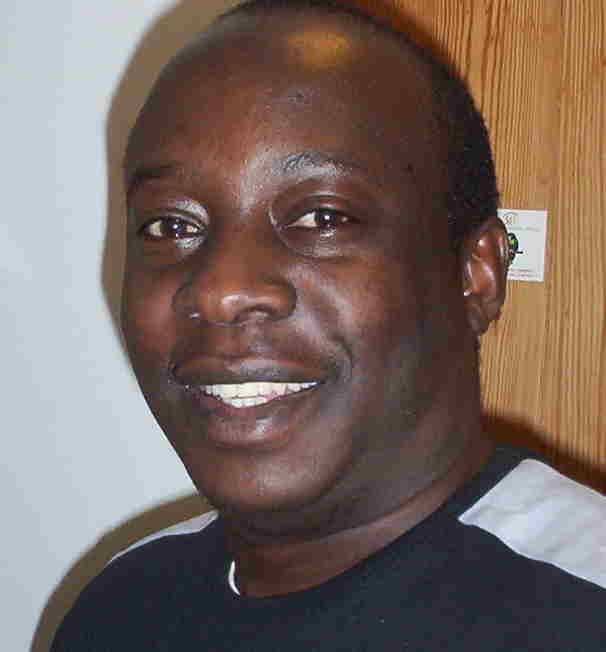
”Bergen is my second home,” says Gerald Kagambirwe Karyeija, (33) Ph.D. student living at Fantoft. In Bergen International Church we are glad to have Gerald as a part of our church family, and we welcome him as a new member of the church council.

- My part of Uganda is also mountainous, so I feel at home in Bergen. I like this city because it is not so fast and hectic as the other European cities. It is less crowded. It is also very safe at night. Bergen hasn’t got the typical city life. Here people retain their family relations. It is a modern city, but with a strong rural dimension.

Last year Gerald took a master degree in public administration at the University of Bergen, and he has recently returned from Uganda to start his work on a Ph.D. on how culture can influence parliamentary decision-making. Uganda is a country with a mix of cultures that result in conflicting views on many things. Muslims, for example oppose a law against polygamy, and Catholics are against laws for family planning.

What was your first impression of Norway?
- Norwegians were cold people! I felt that they didn’t want to relate to me and that they preferred to keep a distance. I also noticed that the living-standard is very high. And I was shocked by the way people express their intimacy in public. But I was pleased to find that it was so easy to relate with people in authority, like my teachers. They treat us as their equals.
Has this impression changed since then?
- Yes, I have found that Norwegians actually want to get to know you, although they are shy, and this may be misinterpreted by foreigners. I have also corrected the stereotype of Europeans. You are told that religion has died in Europe. But I have found so many faithful and spirit-filled people who are serving the Lord. This was better than I had expected.

Why did you join Bergen International Church?
- I went to a number of churches first, and then I found myself at home in BIC for a number of reasons: The services are in English, so I can understand what’s going on. You can find people from all ages in the congregation, from the very young to the very old. And the way the services are conducted suits my personality. Orderly, not noisy, yet not boring! It is truly an International church with people from so many backgrounds. It is homely. You find yourself welcome and involved at once. To me all this was very satisfying.

Do you have any vision for the church?
- I think it can grow, especially in terms of number. There are also many gifts that are not yet discovered and used.
We wish Gerald luck in his work on the Ph.D. and hope his wife Faustine, who is still in Uganda, can join him in Bergen soon.

Ellen Eliassen and Gunnlaug Bøyum were re-elected to a new term on the council at the Annual General Meeting on 26th of February.

Tuesday, February 21, 2006

Candidates for Church Council

The list of candidates for the BIC church council is ready.

The current council (names with country of origin):


  • Hee-Chan Seo, Korea (chair)
  • Gunnlaug Bøyum, Norway, (vice chair)
  • Brenda Robertson, Scotland, (secretary
  • Ellen Eliassen, Norway, (treasurer)
  • Mona Joksch Berg, Norway
  • Sumihar Silalahi, Indonesia (left Bergen summer of 2005)

The candidates

The Annual General Meeting on 26 February will elect three members for a two year period. The candidates are:

  • Ellen Eliassen (70). Ellen is the current treasurer of BIC. She has been on the council since 2003. She is born in Bergen and has spent most of her adult life in Cameroun as a missionary for the Norwegian Missionary Society.

  • Gunnlaug Bøyum (60). Gunnlaug is the current vice chair of BIC, and has also been on the council since 2004. She is from Bergen and has spent many years as missionary in Japan. Currently she works as a teacher. Gunnlaug sometimes plays the piano in the worship services. (Sorry, no picture of her.)

  • Gerald Kagambirwe is from Uganda. He is married and a student of public administration. Gerald is also in the board of Fantoft Christian Fellowship. He has recently returned from field research.

  • Ronald Semyalo is also from Uganda. He is married and studies marine biology. Currently he is in his home country for field research, but plans to join us again in June.

  • Bocong Sun, (20), usually called Bo, is from Beijing in China. He is an active member of our church and of the Chinese Christian fellowship in Bergen. Bo is a high-school student.

Please pray about this and give your vote on Sunday after the service at 17.00.

Pastor Geir

Tuesday, February 07, 2006

The Muhammad Cartoons

The last week people in Europe have witnessed with astonishment how a few simple drawings have sparked a fire in the Muslim world – a fire that is still raging. It has the potential to develop into something really nasty, much worse than the burning of flags and diplomatic missions. As I write this, news about the first deaths have already reached us. How do we as Christians respond to this violence? And can we criticize the prophet of Islam without risking violent reactions?

It is natural to feel disgust towards people who resort to the kind of violence we have seen on TV lately. Yes, the cartoons were an unneccesary provocation. Yet, to us, the reactions seem way out of proportion. We ask ourselves if this reaction is merely political or stem from the root of Islam itself. In this situation we must not answer with more violence and provocation. Now is the time for us to pray for peace and to meet our Muslim fellow citizens with love and respect.

Muslims in the Middle East put the blame on all Danes, all Norwegians and in turn all Westerners for what was done by a couple of newspapers. We already see that some Norwegians do the same and blame all Muslims for what is now going on in some areas. Sadly, also here in Bergen stones have been thrown at one of the mosques, although the leaders of Muslims in Norway have renounced the violent acts in Syria and elsewhere.
A better reaction is to show Christian love to the Muslims you meet in Bergen, whether it is at work, at school or in your neighbourhood.

Also for the sake of our Christian brothers and sisters who live as minorities in Muslim countries, it is now of utmost importance that we do what we can to calm the situation. Diplomats are protected by armed guards. Tourists can get on an airplane and leave. But most local Christians have no other option than to stay and to pray that they will not be the next target of sectarian violence.

The issue of press freedom, however, is something we should continue to debate. It is understandable that Muslims feel offended by the less than respectful drawings of their prophet. Unfortunately, however, criticism of Muhammad has always been met with violence in the Muslim camp. This is not a new development. It goes back to the time when the prophet himself lived in Medina and ordered the murder of a poet who had insulted him. All experience shows us that if we want to communicate with Muslims, it us usually counter-productive to criticise their prophet. It is better to point in a positive way to Jesus, and present him to our Muslim friends and let them think for themselves. Still, the current situation makes it relevant to ask: Is the Muslim community able to accept scrutinizing, honest questions about their prophet without resorting to violence?

Pastor Geir Sakseid

Norwegian summary:
Karikaturteikningane av Muhammad var ein unødig provokasjon, men reaksjonane frå muslimsk hald var skræmande store. Det er no viktig at me ikkje svarar med same mynt og stiller norske muslimar kollektivt til ansvar for det som skjer i delar av den muslimske verda, også med tanke på kva konsekvensar det kan få for kristne minoritetar i muslimske land. Situasjonen gjer det likevel naturleg å stilla spørsmål til om det i det heile tatt er mogleg å stilla kritiske spørsmål til profeten Muhammed utan at det blir svara med vald.

Saturday, January 21, 2006

Thank you, bishop Ole!


Our bishop, Ole D. Hagesæther of the diocese of Bjørgvin, has given us clear, biblically based advice on the issue of homosexuality. In a statement on our diocese’s webpage here (in Norwegian) he clarifies his own views. This comes as the report written by the Church of Norway’s Doctrinal Committee was released on Friday. Half of the committee recommends the ordination of clergy living in homosexual relationships, whereas our bishop remains on the restrictive side. For the last twelve years he has worked with this issue but has only been strengthened in his views. It is evident that our bishop has a loving heart also towards the homosexuals. We need to meet all people with generosity and respect, just as Jesus did. “But we must, in order to be truthful, also remember that in those same stories Jesus calls people to repentance and a new lifestyle,” he writes.

Pastor Geir Sakseid

Tuesday, January 10, 2006

The Attitudes of Discipleship

Having just completed last fall's Bible study on Paul's letter to the Ephesians, we now try something different. Actually, from one perspective it's rather traditional: We will use the Revised Common Lectionary in our worship services. This is a system of Bible readings for the whole year, and it is used by many denominations.

To help us get into the texts we have found an online tool on the ELCA's (Evangelical Lutheran Church in America) web pages for evangelism. The tool, called Daily Discipleship is a series of downloadable files for individuals or small groups who want to study the Sunday gospel passages during the week.

This is what we do: On Sunday we introduce the topic of the week in the worship service. Then we use the same topic in the cell group during the week. This helps us get deeper into the texts, and perhaps Jesus can challenge us in a more personal way.

Currently, the topic of these studies is called "Attitudes of Discipleship". This winter and spring most of the texts will be from the gospel of Mark and of John.

To check out the studies, follow this link: http://www.elca.org/evangelism/dailydiscipleship/

Denne vinteren og våren bruker vi de internasjonale tekstrekkene fra "Revised Common Lectionary", som er brukt av flere kirkesamfunn. Tema akkurat nå er "Disippelsinn". Vi ser på ulike holdninger en Jesus-etterfølger skal ha. Tekstene og hjelp til bibelstudium finnes på lenken over.

Pastor Geir

Sunday, December 25, 2005

Fantastic Christmas Celebration

The parish hall of St. Markus Church was absolutely packed today as just over a hundred people were seated at the tables to celebrate Christmas Day together. Charles Michelo from Zambia led the first part of the celebration while several people participated in sharing the Christmas message. The two sisters Pascale and Marie Solveig played violin and cello. People brought lots of food to share with each other. This was a very encouraging end to the year 2005. Pray that God will continue to bless us in the coming year!

Menighetsavdelingen i St. Markus kirke var fullpakket i dag, da vel 100 mennesker satt til bords for å feire juledag sammen. Charles Michelo fra Zambia ledet den første delen av festen, og flere personer deltok i å fortelle julebudskapet. De to søstrene Pascale og Marie Solveig spilte fiolin og cello. Folk hadde tatt med seg mye mat som vi delte med hverandre. Dette var en svært oppmuntrende avslutning på 2005. Be om at Gud må fortsette å velsigne oss til neste år!

Tuesday, October 25, 2005

Fighting violence against women


At the time of writing, the total collected money from the national TV fundraising campaign last Sunday has reached 134,5 million Kroner. In our ecumenical worship service we collected 2606 kroner.
In the service we focused on women from various angles. Rev. Jacob Frode Olsen from Bergen Cathedral preached on how Jesus healed a woman (Luke 13:10-17). Mrs Lillian Michelo, who is a midwife from Zambia, informed us about the situation of women in Africa.
There was much music in the service. Our own member, Nathanael Hale played the prelude and the postlude on his bassoon. Vidar Hovden, the pastor of Adventkirken (the Adventist Church) played a piece on the panflute and accompanied the worship team, which was helped by a group from Fantoft Christian Fellowship.
About fifty people attended the service.

Ellen is seventy!


Congratulations to one of our oldest members, Ellen Eliassen, who turned seventy on October 15. Ellen is our church treasurer and has served as a missionary in Cameroun for more than forty years. She is often the person who greets you with a smile and a handshake when you enter the door of Bergen International Church.
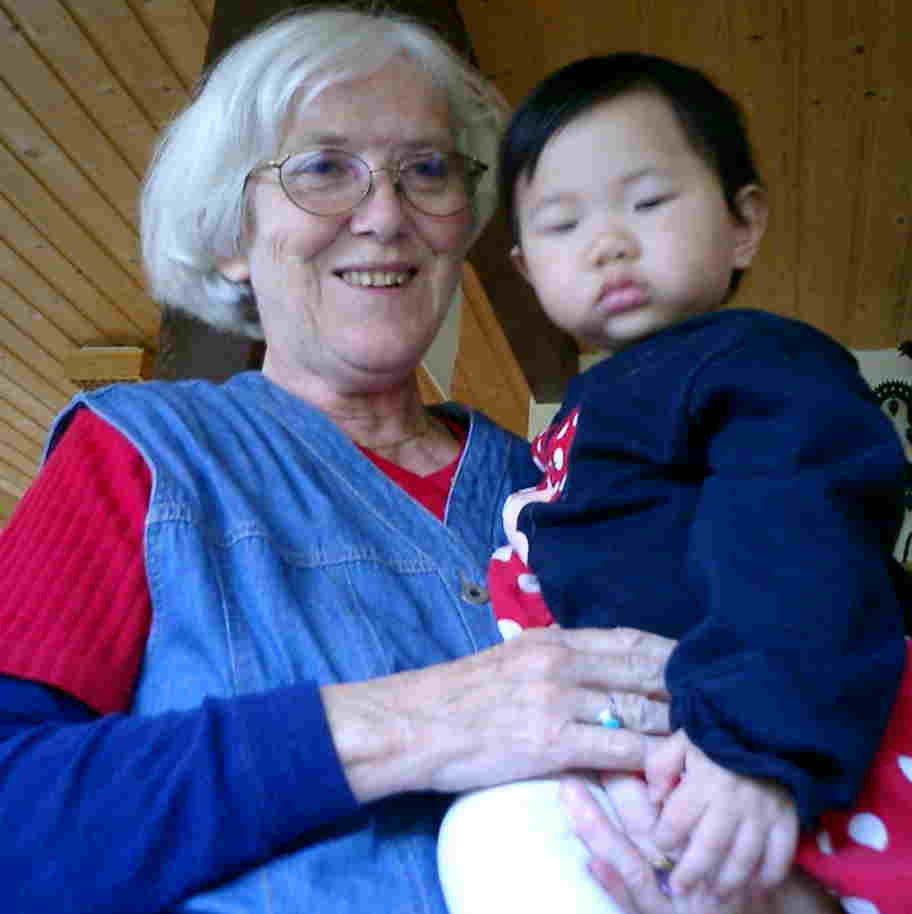
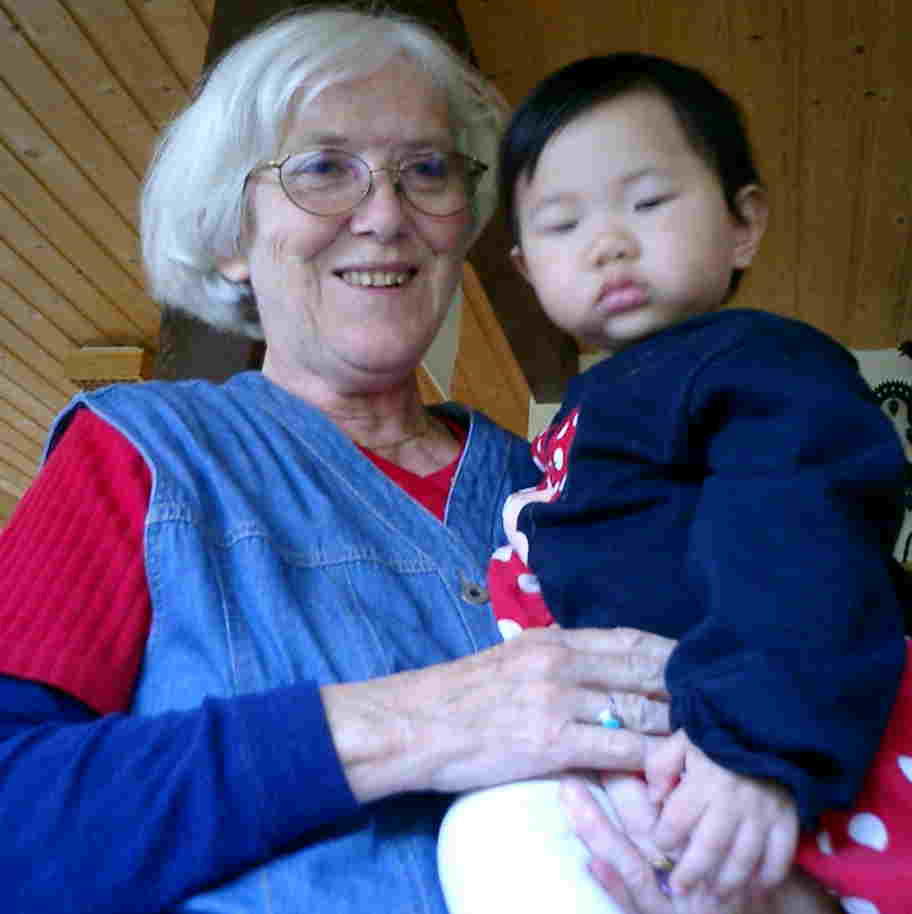
Here she is together with Annabelle, our youngest member.
We love you, Ellen!

Sunday, October 09, 2005

Hårek and Mou in Pakistan: Fine but shaken

Our condolences and prayers go out to all those who have been afflicted by the terrible earthquake in Pakistan. In the midst of it all, we have received an email from former BIC members currently living in Islamabad, the capital of Pakistan. Hårek Aspenes and his wife Moushumi with children Vincent and Amias, were active in the church before we started regular services in the fall of 2002. They are safe, thank God, but obviously shocked and tired. We include some passages that Moushumi wrote:

"It is definitely the worst I have ever felt in my life. Coming from Bangladesh, I do not know much about earthquakes since we hardly had it in BD... I jumped up when I felt the terrible shaking of the house. Whole house was banging and shaking. I ran outside after going down and waited for Vincent and Harek to come down. When they were late, all I was asking God was to stop this thing. It stopped and no one was hurt, but we lost our strength...
Today is the second day and often we experience the aftershock. The house moves and we try to hurry to go out. But we are fed up now. It is too much to run all the time. No one in Islamabad slept last night. I felt constant trembling when I lay my head and I was up and around. I planned how I will carry the boys down and out if the quake began voilently again. But Harek is as usual more relaxed. Anyway, just to tell you all, we are fine but shaken.
But we are praying for those we are still under that 19 story building. May be dead and may be alive. And we have lost one Swedish mom with her 3 children. Till now no sign of their bodies. Also one frined of ours, named Raheela Gul. Does the name ring a bell? She was becoming famous for hiking in dangerous places. She is a Pakistani - Norwegian. She went to that building to see a relative and spent the night with her relatives. Last night at 2am, her brother was still frantically looking for her. Such a pity. I talked to her two weeks ago. She booked hotel for us in Khagan and Naran valley. I have not got a chance to say thanks to her. She was very tall and very thin. Full of adventure. Life is often harsh. I pray that Raheela comes out of the debris alive and well. "

Friday, October 07, 2005

From Bergen to Spitsbergen

Dag Erik and I just returned from a Nor-Can expedition to an Arctic research town (Ny Ålesund; population ca. 30) on an island called Spitsbergen (Svalbard). Dag Erik was going up to visit his sister, who works there as a cook, and I got to tag along. It was a great experience and the nature was fantastic with the snow-covered mountains, glaciers etc. I made some photo pages of the trip. The links are below if you're curious to see what life was like for two BIC members at 79 degrees north. And yes, it can get cold up there.

Dominic

http://www.geocities.com/dominicandre2/domnanton3pg1.html

http://www.geocities.com/dominicandre2/domnanton3pg2.html

http://www.geocities.com/dominicandre2/domnanton3pg3.html

http://www.geocities.com/dominicandre2/domnanton3pg4.html

Thursday, September 29, 2005

Church Camp


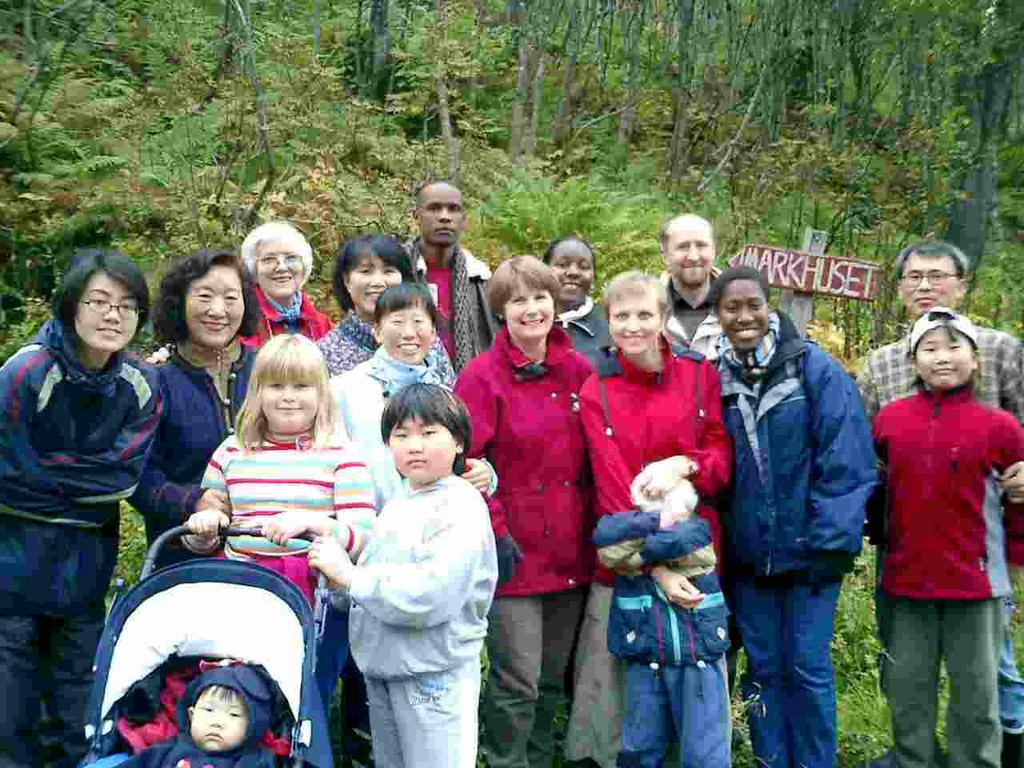
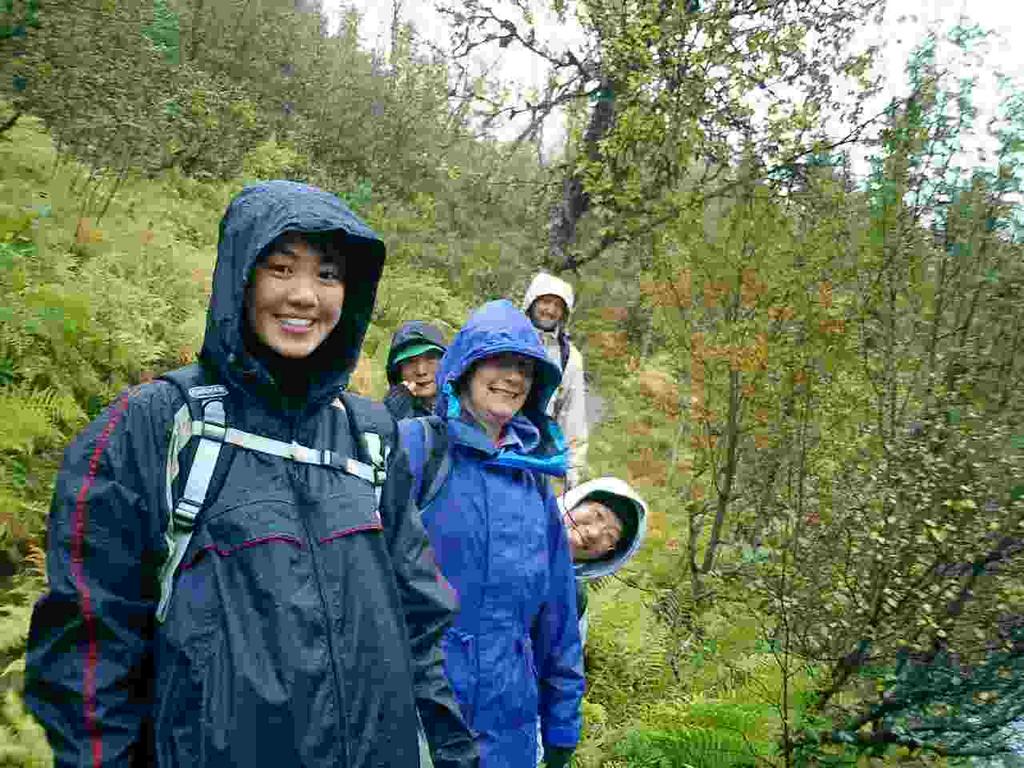
We had a great trip to Markhuset in the awesome valley of Eksingedalen last week-end. a perfect time and place to experience Norwegian nature at its best. Best of all: It didn't rain all the time - we even had some nice sunshine!


Of course the purpose of the trip wasn't only to enjoy the nature but to get to know each other better as a church family.

And is there a better way to get to know each other than making meals and sharing them and do the dishes together?

And when there are too few blankets, we get a good exercize in the spiritual discipline of sharing :-)

We should have been more than 18 people enjoying the fellowship, though. We hope for more people next time we go on a church trip somewhere.

Thursday, August 11, 2005

Fire From The North


Wow! was the only word I could say after the first meeting at the Fire From The North Conference last week!

"Fire From The North" was the name of a prayer conference held in Lerwick in Shetland and lasted for a whole week! Brenda Robertson and I (Helga Sakseid) represented Bergen International Church.

The goal for the conference was to pray and intercede for North Europe. We were about 350 delegates from all over the world, but most of them from England. It was a most wonderful experience to worship and pray with people who were completely free in the Lord. People danced, waved banners, or people knelt silently, people shared words that God had given them to share, some had a prophecy, others a confession of sin on behalf of their nation. It was amazing to witness how The Holy Spirit gently took over the leading of some of the meetings.

Many people turn away from God in North Europe today, but intercessors from these countries don't give up pursuing the vision that God is going to create something new. God is going to raise up people who are totally comitted to Him and will obey His will no matter what. We must not allow any compromise with the Devil. For the Nordic countries(Norw.,Sweden and Finland) we have the vision that there will be a revival in the younger generation, youth will stand up to be pastors and leaders and share the Gospel with great boldness. A people not bound by the "Jante" spirit but free to be the unique, prescious child of God. There will be a united spirit between the three countries from the northen parts and southwards.
There were visions of more unity between the nations among the believers, and also a spirit of repentence of sin done to other nations. (E.g.during the war.)

I recommend you to visit the website of Fire From The North: http://www.ruachministries.org/fire/default.htm

Helga

Sunday, August 07, 2005

What has Paul got to do with us?


“Let’s get Paul out of the Bible and over in church history! I like reading the gospels, but I disagree with Paul’s views on women or gay people.” Statements like this are quite common these days. But if you don’t like Paul, what would be left of the faith we have?
What about those passages in Paul’s letters that we love to read?
- Therefore there is now no condemnation for those who are in Christ Jesus.
- And now these three remain: faith, hope and love. But the greatest of these is love.
- It is for freedom that Christ has set us free.
- Rejoice in the Lord always. I will say it again. Rejoice!
All these are quotations from Paul’s letters. Which of them would you like to remove from the Bible? As for me, I would like to keep them all. If we can trust Paul when he speaks words that we love to hear, maybe we need to trust him when we hear words that are difficult to understand for people in our time and our society. We need to take time with Paul and let God speak to us through him. If we do we shall get a deeper understanding of the will of God.

This fall in Bergen International Church we shall focus on Paul’s letter to the Ephesians. This small letter covers less than ten pages of the Bible but it has got a lot of deep insight in the mysteries of our faith, as well as much practical advice for our Christian life, relevant even today.

The author begins his letter by identifying himself as “Paul, an apostle of Christ Jesus by the will of God”. After Paul’s dramatic encounter with Christ on the way to Damascus, Jesus himself makes him his apostle. Paul becomes an official spokesman of Jesus. There is no contradiciton between the message of Jesus in the gospels and the message of Jesus through his apostle Paul. It is a mistake to allow same-sex “marriages” on the grounds that Jesus never talks about homosexuality in the gospels. It is the same Jesus who has given Paul and the other apostles the authority to instruct the church on his behalf.

In the Nicene creed we confess that we believe in “one, holy, catholic and apostolic church”. What do we mean by that? Firstly that the church was established by the apostles. Our congregation wasn’t established by Paul, but we are part of the big, universal church that was established by the apostles. We are building on the foundation that the apostles made before us. (Eph. 2:20) Secondly that we need to be in agreement with the apostles. What we believe and how we behave is not for the public opinion to decide. Thirdly that we are in fellowship with the apostles. They belong to the part of the church that is in heaven, while we are still on this earth, but it is still one church. Paul is our apostle, also in the sense that his message is meant for us today.

The letter is addressed “to the saints in Ephesus, the faithful in Christ Jesus”.
We know that Paul had a special relationship with the church in Ephesus. On his third missionary journey he stayed there two years. But in the oldest manuscripts, the words “in Ephesus” are missing. Perhaps the letter was meant for the surrounding churches too. We really don’t know why. But we do know that not only the churches near Ephesus, but the churches all across the Christian world wanted to read this letter and the rest of Paul’s letters. Now it is our turn to see what this apostle has to say to our young congregation here in Bergen.

The first thing we notice is that he writes to “the saints”. This is not the elite Christians, but all God’s people. You are a saint because you belong to God.
Secondly we note the word “faithful”. This can mean “to have faith” or to be faithful or trustworthy. Probably it can mean both. Because someone who believes in Jesus Christ, must also be a trustworthy person.
Thirdly they are “in Christ”. That’s a key term in the Ephesians. To be in Christ is to be united with him, just as an arm belongs to the body. In the same way are we united with Christ and with one another.

There are no Christians in Ephesus today. It is a ruin city. But the apostle Paul has a message “to the saints, the faithful in Christ Jesus” wherever you are. What is that message?

Next time we’ll see that it is a message of grace. The word “grace” appears 12 times throughout the letter. It is a message where the person of Paul is overshadowed completely by the grace of Jesus Christ.

Pastor Geir Sakseid

Thursday, March 10, 2005

Friends across the world

Have you left Bergen? Did you go to Bergen International Church before? Would you like to send us a greeting? Add a comment on the Church Blog!
The pastor

Monday, February 28, 2005

Welcome to the Church Blog!

You're welcome to share your thoughts with us on this page. Perhaps you have a comment on the web pages, or an idea about the church ministry.

The Pastor