Here follows a story from one of our former members who live in Central Asia:
Just wanted to share with you small story of Gods ‘ grace and goodness.
I was in India for conference for about 10 days. On my last day, walking on the street
realized that I don’t have enough Rupees left for taxi to airport. No problem at all,
thought at first. Asked some people about Exchange office, and getting some directions after looking for some time, found out there is no exchange office nearby.
Stopped some taxi, they were asking very High Price to airport as I am foreigner, plus the small taxis had a strike on that day!! Few taxis that were around, were taking advantage of the situation…
So, I had to be in airport in one hour, have no local money and can’t agree and bargain with taxi drivers… because of language barriers…
One young Indian boy was coming along the street and I asked him, do you speak English? Yes, he replied. I asked him is there any place where I can change money?
He said, it is very far from here, are u going to airport? ( he could see that I am with luggage) . I said, yes, but I have problem, first- taxi is asking very high price, and second I don’t have enough Rupees to pay, so, don’t know what to do.. I need a place to change money.. as I have to go to airport asap…
He said, No problem, I will stop taxi and also pay for it! I said, Oh NO, I don’t accept it, if you only stop taxi and bargain for real price, I would be fine.. I pay him in airport as there is Exchange office..
He said, You know, I am a x-tan, and every week I give money to church, Today I will give this money to you and you pay it back to any church!! Can u imajine?
I was sooo touched and started to cry! I just couldn’t believe it!!!
To meet a stranger in India just in time of need and he says I am x-tan and you can give back this money to any church??? In Hyderabad about 80% are Muslims, rest are Hindus!! Very few x-tans.
He stopped taxi, bargain for price and paid for it, saying it is not problem, pay it back to any church!! Young 14-15 years old Indian boy!!
How can anyone say it was an accident? I couldn’t stop crying as I knew it was from above and One who cares about all our needs no matter where we are!!!!
He just sends His message in the midst of any trouble saying “No panic!. You are Not forgotten! I do care for you and I am in control!”
And you know how vulnerable we become when we are in a strange land ha? We start panic about everything! I said, YES, Lord, I got the message; you know that I am in India now and panic about having trouble going to airport! Yes, you are here beside, taking care of me…
Crying…. and wondering… Interesting ha, how can He found me and care about me when in India, among the most populated place? And send his follower to me with His message just on time of need??? But He did!!
Isn’t amazing???? More then just amazing…..
Tuesday, November 13, 2007


Thursday, October 18, 2007
Letter from Frode in Paris

Bon jour à tous!
Many greetings to you from Frode in Paris. As you know I am here to study French before going to Mali as a missionary among the fulani-people. I am studying at a Christian language school in Massy, a suburb just south of Paris.
I feel blessed to be at this school. We are abot 45 students here from many parts of the world. The majority come from North America and Great Britain, but there are also people from Germany, Norway, Hungary, South Corea, China and Brazil. Just as in BIC we experience that we are one in the Lord, despite our different backgrounds. Most of the students are or will become missionaries. In my class I have people who have been missionaries in the jungle in Ecuadore, and people who have been tentmakers in « closed » arab countries. Some of my classmates are becoming missionaries in France, others in North Africa, and others again in Francophone West Africa, like myself. So it is a very inspiring groupt to be part of, and I have the opportunity to learn from the experiences of many people. So it is a privilege to be a student here.
The biggest challenge is off course French. The language, that is. Spoken French is a little bit like mashed potatoes: you smash the words together so that each individual word dissappear. It's a little bit like magic, how those words disappear. Those of you who remember what it is like to learn a new language knows that it can feel almost like becoming a child again. It is difficult to express yourself, to participate in conversations and to contribute in meaningful ways. Linguistically I think I am at about the same level as my 3 year old « nevô » in Norway: an interesting experience. But at the same time it is encouraging to experience that day by day more and more of the mashed potatoes start to make sense. In my situation I find that patience and faithfullness in the studies is important. In Psalm 4,4 God reminds us that « The lord does miracles for the one who is faithfull to him ». I think this applies for all areas of life, also in studying language. My job is to be faithfull in my studies, and than even mashed potatoes will eventually start to speak. In your life there might be other things you need to be faithful about and than see how God can change situations.
I hope everything is well with you in BIC. I pray for you, and look forward to see you during the autumn-break. I am also grateful that you pray for me. In the future I hope to make a blog that we can link to the BIC-home page. But for now here are some prayer points:
GIVE THANKS FOR:
Les Cédres, students and staff and the fellowship we have.
PRAY FOR:
The ministry of Les Cédres
The fellowship between students and staff
That I and the other students will learn French well
In Christ,
Frode
Many greetings to you from Frode in Paris. As you know I am here to study French before going to Mali as a missionary among the fulani-people. I am studying at a Christian language school in Massy, a suburb just south of Paris.
I feel blessed to be at this school. We are abot 45 students here from many parts of the world. The majority come from North America and Great Britain, but there are also people from Germany, Norway, Hungary, South Corea, China and Brazil. Just as in BIC we experience that we are one in the Lord, despite our different backgrounds. Most of the students are or will become missionaries. In my class I have people who have been missionaries in the jungle in Ecuadore, and people who have been tentmakers in « closed » arab countries. Some of my classmates are becoming missionaries in France, others in North Africa, and others again in Francophone West Africa, like myself. So it is a very inspiring groupt to be part of, and I have the opportunity to learn from the experiences of many people. So it is a privilege to be a student here.
The biggest challenge is off course French. The language, that is. Spoken French is a little bit like mashed potatoes: you smash the words together so that each individual word dissappear. It's a little bit like magic, how those words disappear. Those of you who remember what it is like to learn a new language knows that it can feel almost like becoming a child again. It is difficult to express yourself, to participate in conversations and to contribute in meaningful ways. Linguistically I think I am at about the same level as my 3 year old « nevô » in Norway: an interesting experience. But at the same time it is encouraging to experience that day by day more and more of the mashed potatoes start to make sense. In my situation I find that patience and faithfullness in the studies is important. In Psalm 4,4 God reminds us that « The lord does miracles for the one who is faithfull to him ». I think this applies for all areas of life, also in studying language. My job is to be faithfull in my studies, and than even mashed potatoes will eventually start to speak. In your life there might be other things you need to be faithful about and than see how God can change situations.
I hope everything is well with you in BIC. I pray for you, and look forward to see you during the autumn-break. I am also grateful that you pray for me. In the future I hope to make a blog that we can link to the BIC-home page. But for now here are some prayer points:
GIVE THANKS FOR:
Les Cédres, students and staff and the fellowship we have.
PRAY FOR:
The ministry of Les Cédres
The fellowship between students and staff
That I and the other students will learn French well
In Christ,
Frode
Friday, September 07, 2007
Church Council Retreat
 Last week-end the Church Council and the pastor had a great retreat to Kvamskogen. We stayed at Schlumberger's "hytte". Among other things we prayed for and with another and discussed our various fields of leadership responsibilities. Every member of the council will have one area of ministry as his or her special responsibility, and relate to the volunteers in this field:
These are the members of the council:
At the front: Lin Bernard Nka , Cameroun (music ministry); Ronald Semyalo, Uganda (outreach);
Standing: Ellen Eliassen, Norway/Cameroun (finance); Gunnlaug Bøyum, Norway/Japan (Sunday school); Gerald Kagambirwe Karyeija, Uganda (PR and membership/secretary); Brenda Robertson, Scotland (prayer, voluntary ministry/chair of the board).
Thursday, June 14, 2007
A secure future

A flood can be very dramatic. I remember watching the news once when the strong force of a flooding river washed away the ground under a house until the entire house fell into the river and was smashed to pieces. What a shame to lose your house like that. Perhaps he shouldn’t have built his house on that spot, on the sandy land next to a river.
Jesus ended the Sermon on the Mount with this image. Those who listen to his teaching without putting them into practice, are like the stupid man who didn’t build his house on solid ground. We need a good foundation for our life, and we lay this foundation when we put the words of Jesus into practice.
In church this spring we have been going through the Sermon on the Mount, which is found in Matthew chapter 5-7. This is challenging stuff! When you read it, you are constantly tempted to explain it away. “He must be exaggerating; he didn’t really mean it that way; I’m sure it only applies to monks and nuns, but it doesn’t work in real life.” But when we see how quarrelling and infidelity can break up families and destroy lives, we realise that his teaching might be of value after all.
There are many different kinds of storms in our life. It can be sickness and death, it can be moral choices. These storms often come unexpectedly, and when they come, it is important to have a strong foundation. In this sense, I really want us all to be fundamentalists.
Then there is another storm that will face all of us one day. This is the storm of the day of judgement. When your life is over, or when our Lord Jesus Christ returns, there comes a day when the foundations of your life are shaken. On that day it will be evident if you have built your house on the rock or on sand. On that day, will your house stand, or will it fall?
So, Jesus says we need to put his words into practice. What does this mean?
Firstly, we need to repent
If you read the Sermon on the Mount, you realise that God’s standards are so high that we all fall short. Anyone who reads these words and try to take them seriously, will have to realise that we need to repent and ask Jesus to forgive us all our sins. This is because Jesus makes us realise that sin is not only these big, serious things like killing and adultery, it all starts in our heart and in our mind, with the things we think and the things we say. And we need to repent of these things.
Secondly, we need to put our faith in Jesus Christ
We are saved by his grace alone. We can’t earn our way into heaven by doing good deeds. It is only because Jesus died on the cross and rose again from the grave, it is only because of his blood that we can be saved.
But faith is not only receiving forgiveness. Faith is also to believe that Jesus actually is speaking the truth, and to act on this faith.
If I am lost in the middle of a big city, and I ask someone for direction, and he points in this direction, where do I go? If I believe this person, I go in the direction he points me. And if Jesus gives us directions for our life, believing him means to go in the direction he points us.
Thirdly, we need the help of the Holy Spirit
It is a challenging lifestyle Jesus is calling us to when he sits on the hill, teaching his disciples and the crowds who followed him. It is challenging, and indeed impossible humanly speaking. The high standards of his teaching will always lead us to humility and repentance, but we can also trust the Holy Spirit to help us put the words of Jesus into action.
Jesus did not leave us alone like orphans. He has sent his Holy Spirit, and the Spirit of God is full of grace and power, and he will give us the strength we need every day to put the words of Jesus into action. We don’t want to be like the foolish man, who heard his words but did nothing. We want to build a secure future, both for the rest of this life and for the eternal life, and the Holy Spirit will help us build our house on the strong foundation of Jesus Christ – on his forgiveness and on his teaching.
Jesus ended the Sermon on the Mount with this image. Those who listen to his teaching without putting them into practice, are like the stupid man who didn’t build his house on solid ground. We need a good foundation for our life, and we lay this foundation when we put the words of Jesus into practice.
In church this spring we have been going through the Sermon on the Mount, which is found in Matthew chapter 5-7. This is challenging stuff! When you read it, you are constantly tempted to explain it away. “He must be exaggerating; he didn’t really mean it that way; I’m sure it only applies to monks and nuns, but it doesn’t work in real life.” But when we see how quarrelling and infidelity can break up families and destroy lives, we realise that his teaching might be of value after all.
There are many different kinds of storms in our life. It can be sickness and death, it can be moral choices. These storms often come unexpectedly, and when they come, it is important to have a strong foundation. In this sense, I really want us all to be fundamentalists.
Then there is another storm that will face all of us one day. This is the storm of the day of judgement. When your life is over, or when our Lord Jesus Christ returns, there comes a day when the foundations of your life are shaken. On that day it will be evident if you have built your house on the rock or on sand. On that day, will your house stand, or will it fall?
So, Jesus says we need to put his words into practice. What does this mean?
Firstly, we need to repent
If you read the Sermon on the Mount, you realise that God’s standards are so high that we all fall short. Anyone who reads these words and try to take them seriously, will have to realise that we need to repent and ask Jesus to forgive us all our sins. This is because Jesus makes us realise that sin is not only these big, serious things like killing and adultery, it all starts in our heart and in our mind, with the things we think and the things we say. And we need to repent of these things.
Secondly, we need to put our faith in Jesus Christ
We are saved by his grace alone. We can’t earn our way into heaven by doing good deeds. It is only because Jesus died on the cross and rose again from the grave, it is only because of his blood that we can be saved.
But faith is not only receiving forgiveness. Faith is also to believe that Jesus actually is speaking the truth, and to act on this faith.
If I am lost in the middle of a big city, and I ask someone for direction, and he points in this direction, where do I go? If I believe this person, I go in the direction he points me. And if Jesus gives us directions for our life, believing him means to go in the direction he points us.
Thirdly, we need the help of the Holy Spirit
It is a challenging lifestyle Jesus is calling us to when he sits on the hill, teaching his disciples and the crowds who followed him. It is challenging, and indeed impossible humanly speaking. The high standards of his teaching will always lead us to humility and repentance, but we can also trust the Holy Spirit to help us put the words of Jesus into action.
Jesus did not leave us alone like orphans. He has sent his Holy Spirit, and the Spirit of God is full of grace and power, and he will give us the strength we need every day to put the words of Jesus into action. We don’t want to be like the foolish man, who heard his words but did nothing. We want to build a secure future, both for the rest of this life and for the eternal life, and the Holy Spirit will help us build our house on the strong foundation of Jesus Christ – on his forgiveness and on his teaching.
Thursday, May 31, 2007
"Country boy" goes to West Africa

When bishop Ole Hagesæther spoke to Frode Brügger Sætre in his ordination sermon in St. Markus Church on Pentecost Day, he said that although he looked like a naïve country-boy, he was full of wisdom. Frode was ordained to be a missionary pastor in the middle of West Africa, in Mali. Before the ordination, we had a little chat with him:
What is it that makes a young man move to the borders of the Sahara? Are you especially fond of sand?
I have always loved sunshine, he jokes. Then he gets serious: I have been thinking of becoming a missionary for a long time , but the reason I am going to Mali in particular is because NMS (the Norwegian Missionary Society) decided to send me there. Besides, it is an exciting country, and a place where the gospel is mostly unknown.
What do you hope to achieve in Mali?
I hope to contribute towards building an independent and strong church for the Fulani people together with other missionaries and coworkers. Today there are a few congregations, but still not a church made up of the Fulanis.
But the Fulanis are Muslims and very religious people. Do they need Christian mission?
Yes, just as Norwegians and anyone else do. According to the Christian faith, Jesus is the way to God. Heaven and earth meet in Christ. This is the same for every human being, including the Fulanis. In general, religious knowledge gives a high status in Mali and among the Fulanis, and they are interested in learning more.
Are the missionaries well received among the Fulani people?
Yes, because of all the development aid they have given to everyone, irrespective of their interest in the Christian message, they are respected. They have worked hard to learn the language and the culture of the Fulanis, so that Christianity is not presented as a Western religion.
You have been an active member of Bergen International Church. Tell us why.
It is important that Norwegian Christians do something towards the immigrant population. Many foreigners find it hard to be involved in ordinary Norwegian congregations, and a congregation like BIC is important. Personally, I enjoy the company of people from other cultures, and I like it a lot in this congregation.
What is it that makes a young man move to the borders of the Sahara? Are you especially fond of sand?
I have always loved sunshine, he jokes. Then he gets serious: I have been thinking of becoming a missionary for a long time , but the reason I am going to Mali in particular is because NMS (the Norwegian Missionary Society) decided to send me there. Besides, it is an exciting country, and a place where the gospel is mostly unknown.
What do you hope to achieve in Mali?
I hope to contribute towards building an independent and strong church for the Fulani people together with other missionaries and coworkers. Today there are a few congregations, but still not a church made up of the Fulanis.
But the Fulanis are Muslims and very religious people. Do they need Christian mission?
Yes, just as Norwegians and anyone else do. According to the Christian faith, Jesus is the way to God. Heaven and earth meet in Christ. This is the same for every human being, including the Fulanis. In general, religious knowledge gives a high status in Mali and among the Fulanis, and they are interested in learning more.
Are the missionaries well received among the Fulani people?
Yes, because of all the development aid they have given to everyone, irrespective of their interest in the Christian message, they are respected. They have worked hard to learn the language and the culture of the Fulanis, so that Christianity is not presented as a Western religion.
You have been an active member of Bergen International Church. Tell us why.
It is important that Norwegian Christians do something towards the immigrant population. Many foreigners find it hard to be involved in ordinary Norwegian congregations, and a congregation like BIC is important. Personally, I enjoy the company of people from other cultures, and I like it a lot in this congregation.

Fleirspråkleg ordinasjon i St. Markus
Pinsedag vart ein stor festdag for dei mange som hadde samla seg i St. Markus kyrkje for å vera med på ordinasjonsgudsteneste. Frode Brügger Sætre, som er ein aktiv medlem av Bergen Internasjonale Menighet (BIM), vart ordinert til misjonsprest av biskop Ole Hagesæther. Frode skal bli misjonær for Det Norske Misjonsselskap (NMS) i Mali i Vest-Afrika når han har fullført eit år med ulike kurs.
Gudstenesta i St. Markus kyrkje var halden på fleire språk. Det meste gjekk på engelsk og norsk, men det var også tekstlesingar på koreansk og fransk. Tolk i gudstenesta var Bjørg Hartvedt, som faktisk også var til stades den gong St. Markus kyrkje vart innvigd i 1939. Med i ordinasjonsgudstenesta var også representantar for NMS og Løvstakksiden menighet. Sokneprest Aadne Skiftun uttrykte glede over det gode samarbeidet med BIM som kom til uttrykk på denne måten.
Frode Brügger Sætre er 34 år gammal og kjem frå Austrheim i Nordhordland, men har budd meir eller mindre fast i Bergen dei siste åra. Han studerte teologi på Misjonshøgskulen i Stavanger. Etterpå har han mellom anna arbeidd som misjonssekretær i ”Laget” (Norges Kristelige Student- og Skoleungdomslag). Gjennom Laget har han også vore tilknytta Hald Internasjonale Senter i Mandal. Frode har vore aktivt med i BIM heilt sidan den spede starten i 2001. Både han og kyrkjelyden var glad for at biskopen ville ha ordinasjonen i St. Markus kyrkje.
Pinsedag vart ein stor festdag for dei mange som hadde samla seg i St. Markus kyrkje for å vera med på ordinasjonsgudsteneste. Frode Brügger Sætre, som er ein aktiv medlem av Bergen Internasjonale Menighet (BIM), vart ordinert til misjonsprest av biskop Ole Hagesæther. Frode skal bli misjonær for Det Norske Misjonsselskap (NMS) i Mali i Vest-Afrika når han har fullført eit år med ulike kurs.
Gudstenesta i St. Markus kyrkje var halden på fleire språk. Det meste gjekk på engelsk og norsk, men det var også tekstlesingar på koreansk og fransk. Tolk i gudstenesta var Bjørg Hartvedt, som faktisk også var til stades den gong St. Markus kyrkje vart innvigd i 1939. Med i ordinasjonsgudstenesta var også representantar for NMS og Løvstakksiden menighet. Sokneprest Aadne Skiftun uttrykte glede over det gode samarbeidet med BIM som kom til uttrykk på denne måten.
Frode Brügger Sætre er 34 år gammal og kjem frå Austrheim i Nordhordland, men har budd meir eller mindre fast i Bergen dei siste åra. Han studerte teologi på Misjonshøgskulen i Stavanger. Etterpå har han mellom anna arbeidd som misjonssekretær i ”Laget” (Norges Kristelige Student- og Skoleungdomslag). Gjennom Laget har han også vore tilknytta Hald Internasjonale Senter i Mandal. Frode har vore aktivt med i BIM heilt sidan den spede starten i 2001. Både han og kyrkjelyden var glad for at biskopen ville ha ordinasjonen i St. Markus kyrkje.
I Mali skal Frode gå inn i arbeidet med å nå fulani-folket med den kristne bodskapen. Fulanarane er eit nomadefolk som ferdast over store område langs den sørlege grensa av Sahara, i landa mellom Kamerun og Mali. Dei er tradisjonelt muslimar. ”På same måten som nordmenn og alle andre, treng også fulanarane Jesus”, seier Frode. ”I han møtest himmel og jord.”
Wednesday, May 30, 2007
17th of May Parade in Bergen
.jpg)
This year Bergen International Church participated for the first time in the parade to celebrate Norway's constitution day on the 17th of May. Some thirty plus people joined our group, and we had a great time together - when we finally were allowed to start, after having waited in the cold for almost two hours. Next year we'll dress a bit warmer... .jpg)
.jpg)
Heart to Heart
.jpg)
Here's a picture from the ladies' group "Heart to Heart", which meets on Friday mornings at Brenda's house. The group is always welcoming new members.
Thursday, November 30, 2006
International Christmas Celebration

On Christmas Day, 25 December, you are welcome to celebrate with us in St. Markus Church that our Lord Jesus Christ was born. At 12 mid day we start the celebration with a multi-language worship service up in the main church sanctuary. Afterwards we share a meal downstairs in the parish hall and enjoy the fellowship.
St. Markus church is the big church between Michael Krohns gt and Lien. The address is Lotheveien 1. This church belongs to the local Church of Norway parish of Løvstakksiden. Bergen International Church is an ecumenical, English language international congregation with ties to Church of Norway.
The worship service will be held in several languages, including English and Norwegian. We shall sing Christmas carols from various traditions, read the Christmas story from the Bible, listen to the sermon and pray together.
The meal afterwards is free and open for anyone who wants to come. Last year we were more than a hundred people gathered, and we had a real good time together. We encourage those who come, to bring some of your favourite Christmas food. In this way, we make sure there is enough food for everyone, and we get a good variety of food.
Would you like to come? It is good for the planning committee to know if you plan to come for the meal, so that we get an idea of how many tables we should have ready. So if you plan to come, please send an email to christmas@bergenchurch.no or call the committee leader, Gerald Kagambirwe on 99450521.
We need many helping hands! If you want to help with anything – decorating the place, setting up tables, serving food, cleaning up afterwards – please contact us on the email address or mobile phone number above.
Den framande Jesus
Innvandring og integrering stod på dagsorden på Kyrkjemøtet i november. Det er på tide, sidan Jesus sjølv var ein flyktning og ein innvandrar. Det passar også svært godt å ta dette opp i julenummeret av Løvstakksidene, sidan preiketeksten på juledag seier om Jesus at ”han kom til sitt eige, og hans eigne tok ikkje imot han”. For oss handlar jula om å ta imot Jesus. Det handlar ikkje berre å ta imot han med trua i hjarta. I dag kjem Jesus også til oss som den framande som bankar på kyrkjedøra
Løvstakksiden menighet er ein av dei kyrkjelydane som har opna dørene og tatt godt imot kristne frå andre kulturar. Innvandrarar er representerte både i staben og i soknerådet. For fem år sidan var Solheim og St. Markus, som det heitte den gongen, med og tok initiativ til å starta Bergen Internasjonale Menighet. Og i begge kyrkjene har kristne etniske kyrkjelydar og fellesskap fått lokale til å ha gudstenester på sine språk. På den måten viser me at kristne frå heile verda høyrer saman.
Kulturkollisjonar og misforståelsar er ikkje til å unngå når ulike kristne grupper skal dela kyrkjerommet. Når folk seier at det er store kulturforskjellar mellom Solheim og St. Markus, kor mykje vanskelegare er det ikkje då å forstå kvarandre når ein ikkje snakkar same språk ein gong? Det er då ein utfordring til oss alle å sjå Jesus i den framande. Det trur eg vil gjera det lettare for oss å strekka oss langt så me kan bera over med kvarandre i kjærleik.
Kyrkjemøtet sitt dokument ”Innvandring og integrering – Den norske kirkes rolle i et flerkulturelt samfunn” tar opp mange viktige ting, og det har mange konkrete utfordringar til kyrkja, med forslag til kva me kan gjera for å opna oss endå meir for kvarandre. Også kyrkjemøtet i fjor kom med ei liknande oppfordring: Kyrkjemøtet bad kyrkjelydane om å ”åpne gudstjenestefeiringen så den gir rom for ulike kulturuttrykk og legge til rette for praktisk deltagelse for alle mennesker, inkludert mennesker med ulik språklig og kulturell bakgrunn.”
Jesus var sjølv flyktning. Josef og Maria tok Jesusbarnet i all hast med seg frå Betlehem til Egypt, der dei fekk ”politisk asyl” til faren var over. Dagens kristne egyptarar føler at Jesus på denne måten velsigna Egypt på ein særskilt måte. Kan me her i Norge tenka på same måten når Jesu brør og søstre kjem til oss som flyktningar eller andre innvandrarar i dag? Sjølv føler eg det iallfall slik. Som prest i Bergen Internasjonale Menighet (BIM) blir eg velsigna på mange måtar av dei kristne frå heile verda som samlast til gudsteneste i St. Markus kyrkje.
På juledag har du høve til å oppleva ei festgudsteneste utanom det vanlege. I St Markus skal det vera fleirspråkleg festgudsteneste for å feira han som kom for å ta bustad mellom oss. Denne gudstenesta er eit samarbeid mellom BIM og Løvstakksiden menighet. Gudstenesta blir halden på fleire språk – både norsk, engelsk, kinesisk, koreansk og kanskje fleire også. Me skal synga julesongar frå fleire tradisjonar, og sikkert nokre av dei gode gamle norske også. Og mens me ventar på jul, ønsker eg deg ei god adventstid. Vel møtt til dei mange arrangementa både i Solheim og St Markus!
Løvstakksiden menighet er ein av dei kyrkjelydane som har opna dørene og tatt godt imot kristne frå andre kulturar. Innvandrarar er representerte både i staben og i soknerådet. For fem år sidan var Solheim og St. Markus, som det heitte den gongen, med og tok initiativ til å starta Bergen Internasjonale Menighet. Og i begge kyrkjene har kristne etniske kyrkjelydar og fellesskap fått lokale til å ha gudstenester på sine språk. På den måten viser me at kristne frå heile verda høyrer saman.
Kulturkollisjonar og misforståelsar er ikkje til å unngå når ulike kristne grupper skal dela kyrkjerommet. Når folk seier at det er store kulturforskjellar mellom Solheim og St. Markus, kor mykje vanskelegare er det ikkje då å forstå kvarandre når ein ikkje snakkar same språk ein gong? Det er då ein utfordring til oss alle å sjå Jesus i den framande. Det trur eg vil gjera det lettare for oss å strekka oss langt så me kan bera over med kvarandre i kjærleik.
Kyrkjemøtet sitt dokument ”Innvandring og integrering – Den norske kirkes rolle i et flerkulturelt samfunn” tar opp mange viktige ting, og det har mange konkrete utfordringar til kyrkja, med forslag til kva me kan gjera for å opna oss endå meir for kvarandre. Også kyrkjemøtet i fjor kom med ei liknande oppfordring: Kyrkjemøtet bad kyrkjelydane om å ”åpne gudstjenestefeiringen så den gir rom for ulike kulturuttrykk og legge til rette for praktisk deltagelse for alle mennesker, inkludert mennesker med ulik språklig og kulturell bakgrunn.”
Jesus var sjølv flyktning. Josef og Maria tok Jesusbarnet i all hast med seg frå Betlehem til Egypt, der dei fekk ”politisk asyl” til faren var over. Dagens kristne egyptarar føler at Jesus på denne måten velsigna Egypt på ein særskilt måte. Kan me her i Norge tenka på same måten når Jesu brør og søstre kjem til oss som flyktningar eller andre innvandrarar i dag? Sjølv føler eg det iallfall slik. Som prest i Bergen Internasjonale Menighet (BIM) blir eg velsigna på mange måtar av dei kristne frå heile verda som samlast til gudsteneste i St. Markus kyrkje.
På juledag har du høve til å oppleva ei festgudsteneste utanom det vanlege. I St Markus skal det vera fleirspråkleg festgudsteneste for å feira han som kom for å ta bustad mellom oss. Denne gudstenesta er eit samarbeid mellom BIM og Løvstakksiden menighet. Gudstenesta blir halden på fleire språk – både norsk, engelsk, kinesisk, koreansk og kanskje fleire også. Me skal synga julesongar frå fleire tradisjonar, og sikkert nokre av dei gode gamle norske også. Og mens me ventar på jul, ønsker eg deg ei god adventstid. Vel møtt til dei mange arrangementa både i Solheim og St Markus!
Tuesday, November 07, 2006
African night at BIC
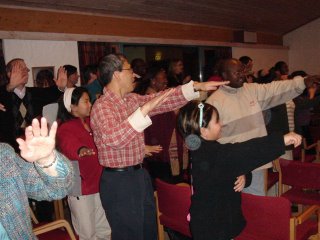
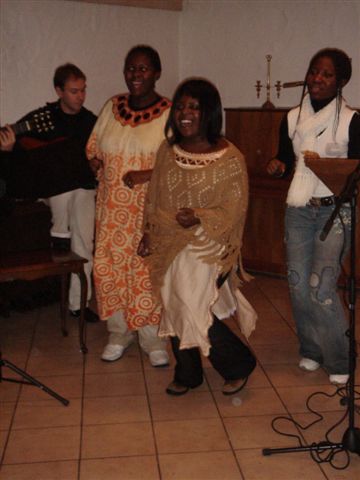
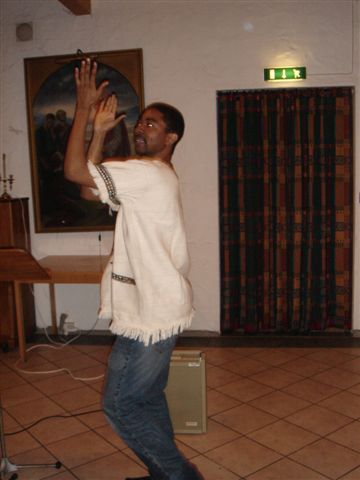
Here are some pictures from our last worship service, led by some of our African members (and a couple of Brazilians). Sorry we have no means to upload the sound from the service, or the atmosphere!



Thursday, October 26, 2006
God's refugees
"To God's elect, strangers in the world". This is how Peter addresses the readers of his first letter to the Christian congregations. Not all of us are refugees, but many of the people in Bergen International Church have left their home country for one reason or another. In one sense all Christians are away from our real home, heaven, and we live our life as strangers in the world.
On Sunday 29 November we start a study on 1 Peter. I quote from the cover of the book 'Homeward Bound', which will be our study guide: "The first letter of Peter is one of the gems of the New Testament. It is packed with glorious truths and teaching about our salvation in Christ, how we are strangers and exiles here on earth, and about our true home in heaven that is to be the focus of our lives. And yet it is equally full of stirring challenge and practical encouragement to live good lives among the unbelievers around us, when that means suffering and heartache."
If you want to get the full value of this study, you should join one of our small groups that meet during the week. In the Sunday worship services we shall have only some 'starters' but the full meal is taken at home in your private study and in the cell group meeetings. The cell groups are always open to new members, but this is a particularly good time to join a group, since we are just finishing our previous study.
Pastor Geir
On Sunday 29 November we start a study on 1 Peter. I quote from the cover of the book 'Homeward Bound', which will be our study guide: "The first letter of Peter is one of the gems of the New Testament. It is packed with glorious truths and teaching about our salvation in Christ, how we are strangers and exiles here on earth, and about our true home in heaven that is to be the focus of our lives. And yet it is equally full of stirring challenge and practical encouragement to live good lives among the unbelievers around us, when that means suffering and heartache."
If you want to get the full value of this study, you should join one of our small groups that meet during the week. In the Sunday worship services we shall have only some 'starters' but the full meal is taken at home in your private study and in the cell group meeetings. The cell groups are always open to new members, but this is a particularly good time to join a group, since we are just finishing our previous study.
Pastor Geir
Monday, October 09, 2006
Purpose-Driven Life
This fall our church is going through the famous book "Purpose Driven Life". Many have found a new perspective on life through the study of his book.
Some of our members sent this interview with Rick Warren:
This is an absolutely incredible interview with Rick Warren , "Purpose Driven Life " author and pastor of Saddleback Church in California . His wife now has cancer, and he now has "wealth" from the book sales.
In the interview by Paul Bradshaw with Rick Warren, Rick said:
"People ask me, "What is the purpose of life?" And I respond: In a nutshell, life is preparation for eternity. We were made to last forever, and God wants us to be with Him in Heaven.
One day my heart is going to stop, and that will be the end of my body-- but not the end of me.
I may live 60 to 100 years on earth, but I am going to spend trillions of years in eternity. This is the warm-up act - the dress rehearsal.
God wants us to practice on earth what we will do forever in eternity. We were made by God and for God, and until you figure that out, life isn't going to make sense.
Life is a series of problems: Either you are in one now, you're just coming out of one, or you're getting ready to go into another one.
The reason for this is that God is more interested in your character than your comfort.
God is more interested in making your life holy than He is in making your life happy.
We can be reasonably happy here on earth, but that's not the goal of life. The goal is to grow in character, in Christ likeness.
This past year has been the greatest year of my life but also the toughest, with my wife, Kay, getting cancer.
I used to think that life was hills and valleys - you go through a dark time, then you go to the mountaintop, back and forth. I don't believe that anymore.
Rather than life being hills and valleys, I believe that it's kind of like two rails on a railroad track, and at all times you have something good and something bad in your life.
No matter how good things are in your life, there is always something bad that needs to be worked on.
And no matter how bad things are in your life, there is always something good you can thank God for.
You can focus on your purposes, or you can focus on your problems.
If you focus on your problems, you're going into self-centeredness, "which is my problem, my issues, my pain."
But one of the easiest ways to get rid of pain is to get your focus off yourself and onto God and others.
We discovered quickly that in spite of the prayers of hundreds of thousands of people, God was not going to heal Kay or make it easy for her.
It has been very difficult for her, and yet God has strengthened her character, given her a ministry of helping other people, given her a testimony, drawn her closer to Him and to people.
You have to learn to deal with both the good and the bad of life. Actually, sometimes learning to deal with the good is harder. For instance, this past year, all of a sudden, when the book sold 15 million copies, it made me instantly very wealthy.
It also brought a lot of notoriety that I had never had to deal with before. I don't think God gives you money or notoriety for your own ego or for you to live a life of ease.
So I began to ask God what He wanted me to do with this money, notoriety and influence. He gave me two different passages that helped me decide what to do, II Corinthians 9 and Psalm 72.
First, in spite of all the money coming in, we would not change our lifestyle one bit. We made no major purchases.
Second, about midway through last year, I stopped taking a salary from the church.
Third, we set up foundations to fund an initiative we call The Peace Plan to plant churches, equip leaders, assist the poor, care for the sick, and educate the next generation.
Fourth, I added up all that the church had paid me in the 24 years since I started the church, and I gave it all back. It was liberating to be able to serve God for free.
We need to ask ourselves: Am I going to live for possessions? Popularity?
Am I going to be driven by pressures? Guilt? Bitterness? Materialism? Or am I going to be driven by God's purposes (for my life)?
When I get up in the morning, I sit on the side of my bed and say, God, if I don't get anything else done today, I want to know You more and love You better. God didn't put me on earth just to fulfill a to-do list. He's more interested in what I am than what I do. That's why we're called human beings, not human doings.
Happy moments, PRAISE GOD. Difficult moments, SEEK GOD. Quiet moments, WORSHIP GOD. Painful moments, TRUST GOD. Every moment, THANK GOD. "
Some of our members sent this interview with Rick Warren:
This is an absolutely incredible interview with Rick Warren , "Purpose Driven Life " author and pastor of Saddleback Church in California . His wife now has cancer, and he now has "wealth" from the book sales.
In the interview by Paul Bradshaw with Rick Warren, Rick said:
"People ask me, "What is the purpose of life?" And I respond: In a nutshell, life is preparation for eternity. We were made to last forever, and God wants us to be with Him in Heaven.
One day my heart is going to stop, and that will be the end of my body-- but not the end of me.
I may live 60 to 100 years on earth, but I am going to spend trillions of years in eternity. This is the warm-up act - the dress rehearsal.
God wants us to practice on earth what we will do forever in eternity. We were made by God and for God, and until you figure that out, life isn't going to make sense.
Life is a series of problems: Either you are in one now, you're just coming out of one, or you're getting ready to go into another one.
The reason for this is that God is more interested in your character than your comfort.
God is more interested in making your life holy than He is in making your life happy.
We can be reasonably happy here on earth, but that's not the goal of life. The goal is to grow in character, in Christ likeness.
This past year has been the greatest year of my life but also the toughest, with my wife, Kay, getting cancer.
I used to think that life was hills and valleys - you go through a dark time, then you go to the mountaintop, back and forth. I don't believe that anymore.
Rather than life being hills and valleys, I believe that it's kind of like two rails on a railroad track, and at all times you have something good and something bad in your life.
No matter how good things are in your life, there is always something bad that needs to be worked on.
And no matter how bad things are in your life, there is always something good you can thank God for.
You can focus on your purposes, or you can focus on your problems.
If you focus on your problems, you're going into self-centeredness, "which is my problem, my issues, my pain."
But one of the easiest ways to get rid of pain is to get your focus off yourself and onto God and others.
We discovered quickly that in spite of the prayers of hundreds of thousands of people, God was not going to heal Kay or make it easy for her.
It has been very difficult for her, and yet God has strengthened her character, given her a ministry of helping other people, given her a testimony, drawn her closer to Him and to people.
You have to learn to deal with both the good and the bad of life. Actually, sometimes learning to deal with the good is harder. For instance, this past year, all of a sudden, when the book sold 15 million copies, it made me instantly very wealthy.
It also brought a lot of notoriety that I had never had to deal with before. I don't think God gives you money or notoriety for your own ego or for you to live a life of ease.
So I began to ask God what He wanted me to do with this money, notoriety and influence. He gave me two different passages that helped me decide what to do, II Corinthians 9 and Psalm 72.
First, in spite of all the money coming in, we would not change our lifestyle one bit. We made no major purchases.
Second, about midway through last year, I stopped taking a salary from the church.
Third, we set up foundations to fund an initiative we call The Peace Plan to plant churches, equip leaders, assist the poor, care for the sick, and educate the next generation.
Fourth, I added up all that the church had paid me in the 24 years since I started the church, and I gave it all back. It was liberating to be able to serve God for free.
We need to ask ourselves: Am I going to live for possessions? Popularity?
Am I going to be driven by pressures? Guilt? Bitterness? Materialism? Or am I going to be driven by God's purposes (for my life)?
When I get up in the morning, I sit on the side of my bed and say, God, if I don't get anything else done today, I want to know You more and love You better. God didn't put me on earth just to fulfill a to-do list. He's more interested in what I am than what I do. That's why we're called human beings, not human doings.
Happy moments, PRAISE GOD. Difficult moments, SEEK GOD. Quiet moments, WORSHIP GOD. Painful moments, TRUST GOD. Every moment, THANK GOD. "
Tuesday, August 22, 2006
BCCF - a place for the Chinese in Bergen

The Chinese Christians in Bergen have recently organised themselves as BCCF - Bergen Chinese Christian Fellowship. BCCF will increase the number of Chinese worship services to have services on two Saturdays each month, starting from September 26. The services will take place in the parish hall, downstairs in St. Markus Church, Lotheveien 1. They are organised together with Bergen International Church and the Oslo congregation of SCCC - Scandinavia Chinese Christian Church. The leader of BCCF is Dr Liu Tiancun from Beijing.
BKKF
Gruppen av kristne kinesere i Bergen er nå organisert under navnet Bergen Kinesiske Kristne Fellesskap. Det langsiktige målet er å danne en egen kinesisk menighet i Bergen, men foreløpig organiserer BKKF gudstjenester på kinesisk i St. Markus kirke to lørdager i måneden. Dette skjer som et samarbeid mellom Bergen Internasjonale Menighet og den kinesiske menigheten i Oslo, som er en del av SCCC – Scandinavia Chinese Christian Church. Den nye lederen for BKKF heter Liu Tiancun og kommer fra Beijing.
Monday, June 26, 2006
World Cup Mission
Last Sunday we prayed for one of our members who is on a short-term mission trip to the football World Cup in Germany (name withheld), and today we have his report:
"Dear Friends,
Thank you so much for your prayers.
Yesterday we had a very good day here. It was a big gathering
at one market here in town. All the churches had joined forces.
They had different activities for the kids, a lot food, and different
groups at the stage.
I felt that I got prayer answered yesterday. I had a very good
conversation with one of the people who visited our stand.
I was very blessed, and I think that he was blessed through
it. And that was exactly what I asked for prayers for.
Saturday we also had a very good visit to one from Ghana.
He shared a lot of interesting things from his life.
I hope the week will have more of this.
blessings to all you."
Keep on praying!
Pastor Geir
"Dear Friends,
Thank you so much for your prayers.
Yesterday we had a very good day here. It was a big gathering
at one market here in town. All the churches had joined forces.
They had different activities for the kids, a lot food, and different
groups at the stage.
I felt that I got prayer answered yesterday. I had a very good
conversation with one of the people who visited our stand.
I was very blessed, and I think that he was blessed through
it. And that was exactly what I asked for prayers for.
Saturday we also had a very good visit to one from Ghana.
He shared a lot of interesting things from his life.
I hope the week will have more of this.
blessings to all you."
Keep on praying!
Pastor Geir
Saturday, May 06, 2006
Baby Shower

Our youngest member, Selma Marie Joksch Berg, was born to Mona and Dag Erik a month ago, on April 5. Today we had a baby shower for her in the parsonage. Congratulations with the baby!
Wednesday, April 26, 2006
GOSPEL TRUTH?
A comment on John 20:19-31
Does Jesus want us to be naïve?
When Jesus showed himself to Thomas the sceptic a week after the resurrection, he said to him: “Because you have seen me, you have believed. Blessed are those who have not seen and yet believed” Does Jesus want us to be naïve? Unfortunately, too many people are naïve and believe anything they are told. That is why books like The Da Vinci Code become so popular. They think it is based on thorough research, when it is only a mix of fables. Unlike Thomas, we have never seen the risen Jesus Christ with our physical eyes. The only thing we have is the Bible telling us that it happened. How can we know it is true? Are we naïve to believe these stories? What about these other gospels that have been discovered, like the gospel of Judas?
Why were some books not included in the New Testament?
One of the claims in The da Vinci code is that at the time of the Roman emperor Constantine, there were many gospels in circulation. Dan Brown says that Constantine authorised just four of the gospels and had all the others burned. And when this so-called gospel of Judas becomes known to us, people start believing that they can’t trust our Bible anymore. So what really happened? Let me first give you a short answer and then a long one: The short answer is that there are three main reasons why they were not included: Firstly, they were not written by eye witnesses. Secondly, they were not in general use across the Christian church. Thirdly, they were not in accordance with the teaching of the apostles. Although Constantine, the first Roman emperor to embrace Christianity, had an interest in church politics, there is no evidence that he burnt any Christian books, and he did not authorise a particular list of books.
A long process
The gathering of the scriptures of the New Testament was not the choice of one man or one particular church synod. It was a long process, and it involved all the churches in the Christian world. The first Christians did not have the New Testament. They had something better: the New Testament writers themselves. They had Jesus Christ himself, who is in person the Word of God. They had the apostles, who remembered what he did and what he said, and who had received the Spirit of truth from Jesus.
The next generation of Christians had the scriptures of these apostles and the evangelists. They used these eye witness accounts in their worship services, along with the holy scriptures from the Old Testament. They also had a whole lot of other scriptures. These were widely used as literature, but they were not regarded as holy scripture on the same level as the gospels and the letters of Paul. The most famous of these scriptures have been gathered in a collection called “The apostolic fathers”.
The first known list of recognised New Testament books dates from around AD 170-200. It mentions all the books in our New Testament. The famous bishop Athanasius of Alexandria listed our twenty seven books in the year 365. A few years later, Gerome translated the Bible into Latin and gave the West its standard text, the Vulgate. These lists were then finally confirmed in two general synods in 397 and 418. My point is that this was not the accidental choice of one or two men. The whole Christian church was involved in this long process, and they used very strict criteria: The scriptures had to be eye witness accounts that were in accordance with the apostolic teaching and in common use in the worship services all across the Christian church.
What about the apocryphic gospels or acts?
A number of scriptures were written too late to be regarded as authoritative holy scripture on the same level as the scriptures that were included in our New Testament. These are sometimes called apocryphic books. Some of them are in accordance with the apostolic teaching while others represent heretic teachings like gnostisism. Common for these scriptures is that they try to fill in the gaps where the New Testament scriptures keep silent, for example about the childhood years of Jesus and the stories of the apostles not mentioned in Acts. It was common to give the book a name after a famous person. But even though the intention was good, this wasn’t always reliable.
The Gnostic gospels
Gnostisism was a syncretistic religious system that blended Christian beliefs with Greek philosophy and Eastern mysticism, and very much opposed to Jewish beliefs. It was a dualistic system where everything physical was regarded as evil and only the spiritual was good. The Greek word gnosis means “knowledge”. The idea was that Jesus gave secret knowledge to some of his disciples, who in turn passed it secretly on to others. In the Gnostic gospels the villain of the Biblical stories becomes the hero. The creator god of Genesis becomes the villain, while the serpent is the hero.
What about the gospel of Judas?
This was presented to the public just before Easter this year. It was found in Egypt around 1970 and smuggled to the USA. The fragmented manuscript is a Coptic (Egyptian) translation from Greek, dated to around AD 300. Scholars say that it does not give us new knowledge about Jesus Christ or Judas, but it does give us interesting knowledge about Gnostisism. The original Greek text was probably written around AD 150, so it was not written by Judas. The Church father Irenaus mentions it in AD 185. The text gives us the typical Gnostic picture of Jesus: Divine but not really human. Quite typically it makes the villain into a hero. Judas is the only one who understands who Jesus really is. When Judas betrays Jesus, he is only freeing him of his human “clothing”, so he is actually doing Jesus a favour.
Not naïve
Perhaps some of you also have begun to doubt if the gospels we have in our Bible are true, or perhaps you think they are there by coincidence. Let me tell you that they are not there by coincidence. God has been in control of the process. Our Lord Jesus Christ breathed his Holy Spirit on his disciples. He gave them insight. He spent 40 days with them, teaching them what was written about him in the scriptures of the OT. He gave his disciples authority to pass on this knowledge. And they did so. They wrote down their stories, and the first Christians took great care in passing the scriptures on to those following after them. We are not naïve if we trust them.
Does Jesus want us to be naïve?
When Jesus showed himself to Thomas the sceptic a week after the resurrection, he said to him: “Because you have seen me, you have believed. Blessed are those who have not seen and yet believed” Does Jesus want us to be naïve? Unfortunately, too many people are naïve and believe anything they are told. That is why books like The Da Vinci Code become so popular. They think it is based on thorough research, when it is only a mix of fables. Unlike Thomas, we have never seen the risen Jesus Christ with our physical eyes. The only thing we have is the Bible telling us that it happened. How can we know it is true? Are we naïve to believe these stories? What about these other gospels that have been discovered, like the gospel of Judas?
Why were some books not included in the New Testament?
One of the claims in The da Vinci code is that at the time of the Roman emperor Constantine, there were many gospels in circulation. Dan Brown says that Constantine authorised just four of the gospels and had all the others burned. And when this so-called gospel of Judas becomes known to us, people start believing that they can’t trust our Bible anymore. So what really happened? Let me first give you a short answer and then a long one: The short answer is that there are three main reasons why they were not included: Firstly, they were not written by eye witnesses. Secondly, they were not in general use across the Christian church. Thirdly, they were not in accordance with the teaching of the apostles. Although Constantine, the first Roman emperor to embrace Christianity, had an interest in church politics, there is no evidence that he burnt any Christian books, and he did not authorise a particular list of books.
A long process
The gathering of the scriptures of the New Testament was not the choice of one man or one particular church synod. It was a long process, and it involved all the churches in the Christian world. The first Christians did not have the New Testament. They had something better: the New Testament writers themselves. They had Jesus Christ himself, who is in person the Word of God. They had the apostles, who remembered what he did and what he said, and who had received the Spirit of truth from Jesus.
The next generation of Christians had the scriptures of these apostles and the evangelists. They used these eye witness accounts in their worship services, along with the holy scriptures from the Old Testament. They also had a whole lot of other scriptures. These were widely used as literature, but they were not regarded as holy scripture on the same level as the gospels and the letters of Paul. The most famous of these scriptures have been gathered in a collection called “The apostolic fathers”.
The first known list of recognised New Testament books dates from around AD 170-200. It mentions all the books in our New Testament. The famous bishop Athanasius of Alexandria listed our twenty seven books in the year 365. A few years later, Gerome translated the Bible into Latin and gave the West its standard text, the Vulgate. These lists were then finally confirmed in two general synods in 397 and 418. My point is that this was not the accidental choice of one or two men. The whole Christian church was involved in this long process, and they used very strict criteria: The scriptures had to be eye witness accounts that were in accordance with the apostolic teaching and in common use in the worship services all across the Christian church.
What about the apocryphic gospels or acts?
A number of scriptures were written too late to be regarded as authoritative holy scripture on the same level as the scriptures that were included in our New Testament. These are sometimes called apocryphic books. Some of them are in accordance with the apostolic teaching while others represent heretic teachings like gnostisism. Common for these scriptures is that they try to fill in the gaps where the New Testament scriptures keep silent, for example about the childhood years of Jesus and the stories of the apostles not mentioned in Acts. It was common to give the book a name after a famous person. But even though the intention was good, this wasn’t always reliable.
The Gnostic gospels
Gnostisism was a syncretistic religious system that blended Christian beliefs with Greek philosophy and Eastern mysticism, and very much opposed to Jewish beliefs. It was a dualistic system where everything physical was regarded as evil and only the spiritual was good. The Greek word gnosis means “knowledge”. The idea was that Jesus gave secret knowledge to some of his disciples, who in turn passed it secretly on to others. In the Gnostic gospels the villain of the Biblical stories becomes the hero. The creator god of Genesis becomes the villain, while the serpent is the hero.
What about the gospel of Judas?
This was presented to the public just before Easter this year. It was found in Egypt around 1970 and smuggled to the USA. The fragmented manuscript is a Coptic (Egyptian) translation from Greek, dated to around AD 300. Scholars say that it does not give us new knowledge about Jesus Christ or Judas, but it does give us interesting knowledge about Gnostisism. The original Greek text was probably written around AD 150, so it was not written by Judas. The Church father Irenaus mentions it in AD 185. The text gives us the typical Gnostic picture of Jesus: Divine but not really human. Quite typically it makes the villain into a hero. Judas is the only one who understands who Jesus really is. When Judas betrays Jesus, he is only freeing him of his human “clothing”, so he is actually doing Jesus a favour.
Not naïve
Perhaps some of you also have begun to doubt if the gospels we have in our Bible are true, or perhaps you think they are there by coincidence. Let me tell you that they are not there by coincidence. God has been in control of the process. Our Lord Jesus Christ breathed his Holy Spirit on his disciples. He gave them insight. He spent 40 days with them, teaching them what was written about him in the scriptures of the OT. He gave his disciples authority to pass on this knowledge. And they did so. They wrote down their stories, and the first Christians took great care in passing the scriptures on to those following after them. We are not naïve if we trust them.
Friday, March 17, 2006
Welcome on (the) board, Gerald!
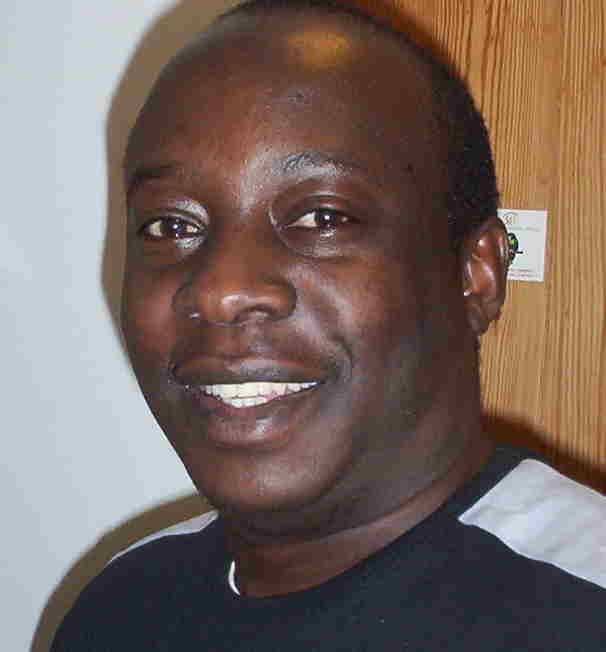
New member of the church council:
”Bergen is my second home,” says Gerald Kagambirwe Karyeija, (33) Ph.D. student living at Fantoft. In Bergen International Church we are glad to have Gerald as a part of our church family, and we welcome him as a new member of the church council.
- My part of Uganda is also mountainous, so I feel at home in Bergen. I like this city because it is not so fast and hectic as the other European cities. It is less crowded. It is also very safe at night. Bergen hasn’t got the typical city life. Here people retain their family relations. It is a modern city, but with a strong rural dimension.
Last year Gerald took a master degree in public administration at the University of Bergen, and he has recently returned from Uganda to start his work on a Ph.D. on how culture can influence parliamentary decision-making. Uganda is a country with a mix of cultures that result in conflicting views on many things. Muslims, for example oppose a law against polygamy, and Catholics are against laws for family planning.
What was your first impression of Norway?
- Norwegians were cold people! I felt that they didn’t want to relate to me and that they preferred to keep a distance. I also noticed that the living-standard is very high. And I was shocked by the way people express their intimacy in public. But I was pleased to find that it was so easy to relate with people in authority, like my teachers. They treat us as their equals.
Has this impression changed since then?
- Yes, I have found that Norwegians actually want to get to know you, although they are shy, and this may be misinterpreted by foreigners. I have also corrected the stereotype of Europeans. You are told that religion has died in Europe. But I have found so many faithful and spirit-filled people who are serving the Lord. This was better than I had expected.
Why did you join Bergen International Church?
- I went to a number of churches first, and then I found myself at home in BIC for a number of reasons: The services are in English, so I can understand what’s going on. You can find people from all ages in the congregation, from the very young to the very old. And the way the services are conducted suits my personality. Orderly, not noisy, yet not boring! It is truly an International church with people from so many backgrounds. It is homely. You find yourself welcome and involved at once. To me all this was very satisfying.
Do you have any vision for the church?
- I think it can grow, especially in terms of number. There are also many gifts that are not yet discovered and used.
We wish Gerald luck in his work on the Ph.D. and hope his wife Faustine, who is still in Uganda, can join him in Bergen soon.
Ellen Eliassen and Gunnlaug Bøyum were re-elected to a new term on the council at the Annual General Meeting on 26th of February.
Tuesday, February 21, 2006
Candidates for Church Council
The list of candidates for the BIC church council is ready.
The current council (names with country of origin):
The current council (names with country of origin):
- Hee-Chan Seo, Korea (chair)
- Gunnlaug Bøyum, Norway, (vice chair)
- Brenda Robertson, Scotland, (secretary
- Ellen Eliassen, Norway, (treasurer)
- Mona Joksch Berg, Norway
- Sumihar Silalahi, Indonesia (left Bergen summer of 2005)
The candidates
The Annual General Meeting on 26 February will elect three members for a two yea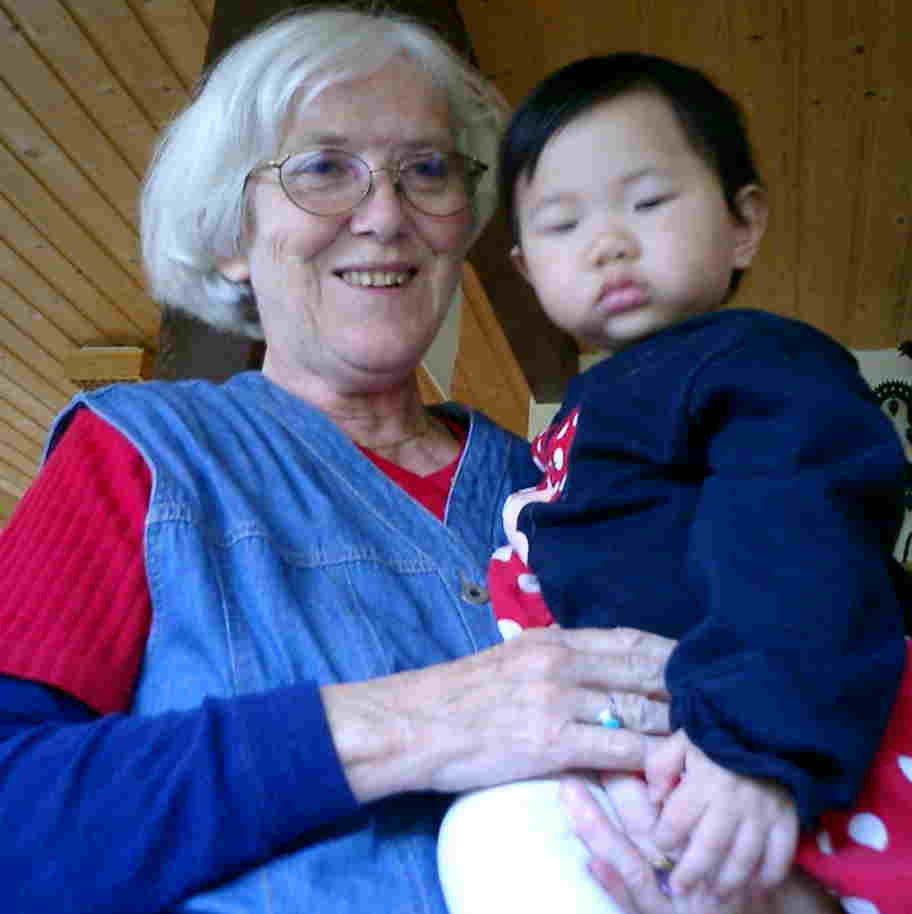 r period. The candidates are:
- Ellen Eliassen (70). Ellen is the current treasurer of BIC. She has been on the council since 2003. She is born in Bergen and has spent most of her adult life in Cameroun as a missionary for the Norwegian Missionary Society.
- Gunnlaug Bøyum (60). Gunnlaug is the current vice chair of BIC, and has also been on the council since 2004. She is from Bergen and has spent many years as missionary in Japan. Currently she works as a teacher. Gunnlaug sometimes plays
 the piano in the worship services. (Sorry, no picture of her.)

- Gerald Kagambirwe is from Uganda. He is married and a student of public administration. Gerald is also in the board of Fantoft Christian Fellowship. He has recently returned from field research.

- Ronald Semyalo is also from Uganda. He is married and studies marine biology. Currently he is in his home country for field research, but plans to join us again in June.
- Bocong Sun, (20), usually called Bo,
 is from Beijing in China. He is an active member of our church and of the Chinese Christian fellowship in Bergen. Bo is a high-school student.

Please pray about this and give your vote on Sunday after the service at 17.00.
Pastor Geir
Tuesday, February 07, 2006
The Muhammad Cartoons
The last week people in Europe have witnessed with astonishment how a few simple drawings have sparked a fire in the Muslim world – a fire that is still raging. It has the potential to develop into something really nasty, much worse than the burning of flags and diplomatic missions. As I write this, news about the first deaths have already reached us. How do we as Christians respond to this violence? And can we criticize the prophet of Islam without risking violent reactions?
It is natural to feel disgust towards people who resort to the kind of violence we have seen on TV lately. Yes, the cartoons were an unneccesary provocation. Yet, to us, the reactions seem way out of proportion. We ask ourselves if this reaction is merely political or stem from the root of Islam itself. In this situation we must not answer with more violence and provocation. Now is the time for us to pray for peace and to meet our Muslim fellow citizens with love and respect.
Muslims in the Middle East put the blame on all Danes, all Norwegians and in turn all Westerners for what was done by a couple of newspapers. We already see that some Norwegians do the same and blame all Muslims for what is now going on in some areas. Sadly, also here in Bergen stones have been thrown at one of the mosques, although the leaders of Muslims in Norway have renounced the violent acts in Syria and elsewhere.
A better reaction is to show Christian love to the Muslims you meet in Bergen, whether it is at work, at school or in your neighbourhood.
Also for the sake of our Christian brothers and sisters who live as minorities in Muslim countries, it is now of utmost importance that we do what we can to calm the situation. Diplomats are protected by armed guards. Tourists can get on an airplane and leave. But most local Christians have no other option than to stay and to pray that they will not be the next target of sectarian violence.
The issue of press freedom, however, is something we should continue to debate. It is understandable that Muslims feel offended by the less than respectful drawings of their prophet. Unfortunately, however, criticism of Muhammad has always been met with violence in the Muslim camp. This is not a new development. It goes back to the time when the prophet himself lived in Medina and ordered the murder of a poet who had insulted him. All experience shows us that if we want to communicate with Muslims, it us usually counter-productive to criticise their prophet. It is better to point in a positive way to Jesus, and present him to our Muslim friends and let them think for themselves. Still, the current situation makes it relevant to ask: Is the Muslim community able to accept scrutinizing, honest questions about their prophet without resorting to violence?
Pastor Geir Sakseid
Norwegian summary:
Karikaturteikningane av Muhammad var ein unødig provokasjon, men reaksjonane frå muslimsk hald var skræmande store. Det er no viktig at me ikkje svarar med same mynt og stiller norske muslimar kollektivt til ansvar for det som skjer i delar av den muslimske verda, også med tanke på kva konsekvensar det kan få for kristne minoritetar i muslimske land. Situasjonen gjer det likevel naturleg å stilla spørsmål til om det i det heile tatt er mogleg å stilla kritiske spørsmål til profeten Muhammed utan at det blir svara med vald.
It is natural to feel disgust towards people who resort to the kind of violence we have seen on TV lately. Yes, the cartoons were an unneccesary provocation. Yet, to us, the reactions seem way out of proportion. We ask ourselves if this reaction is merely political or stem from the root of Islam itself. In this situation we must not answer with more violence and provocation. Now is the time for us to pray for peace and to meet our Muslim fellow citizens with love and respect.
Muslims in the Middle East put the blame on all Danes, all Norwegians and in turn all Westerners for what was done by a couple of newspapers. We already see that some Norwegians do the same and blame all Muslims for what is now going on in some areas. Sadly, also here in Bergen stones have been thrown at one of the mosques, although the leaders of Muslims in Norway have renounced the violent acts in Syria and elsewhere.
A better reaction is to show Christian love to the Muslims you meet in Bergen, whether it is at work, at school or in your neighbourhood.
Also for the sake of our Christian brothers and sisters who live as minorities in Muslim countries, it is now of utmost importance that we do what we can to calm the situation. Diplomats are protected by armed guards. Tourists can get on an airplane and leave. But most local Christians have no other option than to stay and to pray that they will not be the next target of sectarian violence.
The issue of press freedom, however, is something we should continue to debate. It is understandable that Muslims feel offended by the less than respectful drawings of their prophet. Unfortunately, however, criticism of Muhammad has always been met with violence in the Muslim camp. This is not a new development. It goes back to the time when the prophet himself lived in Medina and ordered the murder of a poet who had insulted him. All experience shows us that if we want to communicate with Muslims, it us usually counter-productive to criticise their prophet. It is better to point in a positive way to Jesus, and present him to our Muslim friends and let them think for themselves. Still, the current situation makes it relevant to ask: Is the Muslim community able to accept scrutinizing, honest questions about their prophet without resorting to violence?
Pastor Geir Sakseid
Norwegian summary:
Karikaturteikningane av Muhammad var ein unødig provokasjon, men reaksjonane frå muslimsk hald var skræmande store. Det er no viktig at me ikkje svarar med same mynt og stiller norske muslimar kollektivt til ansvar for det som skjer i delar av den muslimske verda, også med tanke på kva konsekvensar det kan få for kristne minoritetar i muslimske land. Situasjonen gjer det likevel naturleg å stilla spørsmål til om det i det heile tatt er mogleg å stilla kritiske spørsmål til profeten Muhammed utan at det blir svara med vald.
Saturday, January 21, 2006
Thank you, bishop Ole!
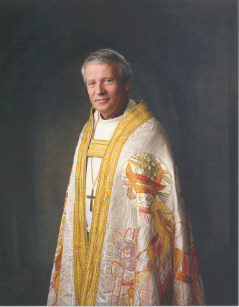
Our bishop, Ole D. Hagesæther of the diocese of Bjørgvin, has given us clear, biblically based advice on the issue of homosexuality. In a statement on our diocese’s webpage here (in Norwegian) he clarifies his own views. This comes as the report written by the Church of Norway’s Doctrinal Committee was released on Friday. Half of the committee recommends the ordination of clergy living in homosexual relationships, whereas our bishop remains on the restrictive side. For the last twelve years he has worked with this issue but has only been strengthened in his views. It is evident that our bishop has a loving heart also towards the homosexuals. We need to meet all people with generosity and respect, just as Jesus did. “But we must, in order to be truthful, also remember that in those same stories Jesus calls people to repentance and a new lifestyle,” he writes.
Pastor Geir Sakseid
Subscribe to:
Posts (Atom)
